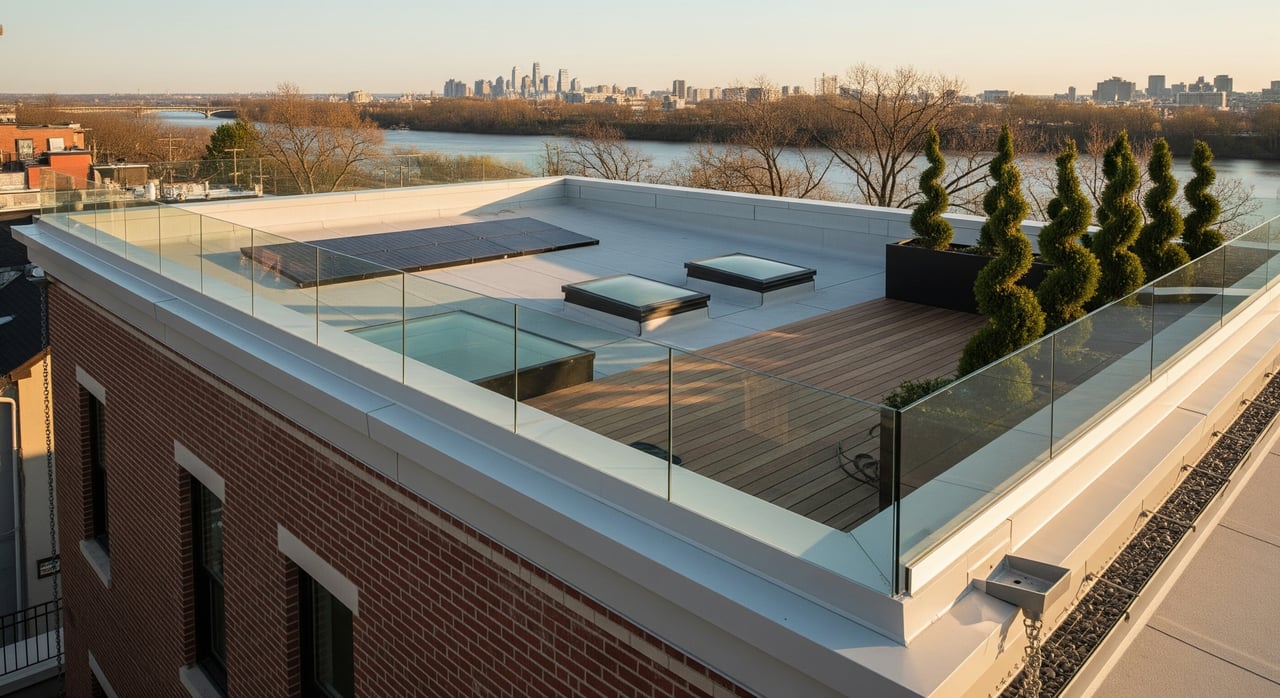
Thinking about buying a rowhouse in East Falls and noticing a flat roof on the listing photos? You’re not alone. Many Philly homes use flat or low-slope roofs, and they work well when installed and maintained correctly. In this guide, you’ll learn how these roofs are built, what to look for during inspections, how to think about warranties and permits, and when to bring in a roofer. Let’s dive in.
Why flat roofs are common in East Falls
Flat and low-slope roofs fit Philly’s urban rowhouse layout. You’ll see parapet walls with scuppers and leader pipes to move water off the roof. Local weather brings hot, humid summers and freeze–thaw cycles in winter, so drainage and flashing details matter. Many homes also use rooftop space for decks or HVAC equipment, which adds planning and maintenance needs.
Common flat-roof materials
Different homes in East Falls and nearby neighborhoods may have older systems or newer membranes. Each has strengths and maintenance needs.
EPDM rubber
- Pros: Cost-effective, works on very low slopes, and repairs are straightforward. Seams can be reliable when properly adhered.
- Cons: Black surfaces absorb heat, which stresses seams and flashings. Appearance is not reflective.
- Lifespan: Commonly cited around 15 to 30 years when installed and maintained properly.
TPO
- Pros: Often white and reflective, which can reduce cooling loads. Seams are heat-welded for strong bonds.
- Cons: Formulation differences have created performance concerns historically, so pick a reputable product and installer.
- Lifespan: Typically mid to long term, depending on product and installation quality.
PVC
- Pros: Durable welded seams and good chemical resistance. Works well where there is rooftop equipment.
- Cons: Higher material cost and careful detailing is important.
- Lifespan: Comparable to other single-ply membranes when properly installed.
Modified bitumen
- Pros: Robust under foot traffic and common on residential low-slope roofs. Performs well in the short to medium term.
- Cons: Torch applications carry fire risk, and detailing at seams and flashings must be precise.
- Lifespan: Varies with product and method.
Built-up roofing (BUR)
- Pros: Layered redundancy with a long track record.
- Cons: Heavier and gravel can clog drains. Less common for small modern retrofits.
- Lifespan: Can be long when installed and maintained well.
Drainage and flashing basics
Good drainage prevents ponding water and prolongs the life of any flat roof.
How water should leave the roof
- Scuppers through parapet walls with downspouts are very common on rowhouses.
- Some buildings use internal drains and leader pipes.
- Gutters appear where roof geometry allows.
- Tapered insulation or crickets are used to guide water to the outlets.
Red flags buyers can spot
- Standing water that lingers more than 48 hours after rain is a concern.
- Blisters, splits, patches, or seam repairs suggest wear or poor detailing.
- Rusted or loose flashing, cracked parapet copings, or stained façade areas near scuppers can indicate past drainage issues.
- Interior stains, musty odors, or soft spots hint at chronic leaks or moisture.
Rooftop decks and equipment
- Decks on sleepers or pavers need a proper protection layer and approved details to avoid punctures and blocked drainage.
- Fasteners through membranes are risky unless part of a system designed for that use.
- Confirm that any deck or HVAC placement was installed with manufacturer-approved methods and does not void warranties.
How to inspect a flat roof
A general home inspection will flag obvious issues, but low-slope roofs often benefit from a roof specialist’s look.
- Start with your general home inspector to identify visible concerns and interior water intrusion.
- If seams, flashings, or a deck are present, bring in a qualified low-slope roofing contractor for a detailed assessment.
- For suspected hidden moisture, specialized contractors can perform infrared scans or core probing.
Buyer checklist for roof reviews
- Exterior roof surface
- Membrane condition: cracks, splits, seam separation, blistering, or patches.
- Drainage: clear scuppers, internal drains, gutters, and downspouts. Look for ponding marks.
- Flashing: parapets, chimneys, vents, and roof-to-wall areas.
- Parapets and copings: secure, sealed, and free of gaps.
- Penetrations: HVAC, plumbing stacks, skylights sealed with correct materials.
- Signs and quality of previous repairs.
- Interior
- Ceiling stains, mold, soft sheathing, or wet insulation.
- Ask sellers about any past leaks and how they were addressed.
- Documentation
- Warranties for materials and workmanship.
- Receipts for installation or major repairs and prior inspection reports.
- Philadelphia permit records for recent work.
Maintenance you should expect
Flat roofs last longer with routine care. Plan for simple tasks and quick fixes when small issues pop up.
- Inspect in spring and fall, and after major storms or heavy snow.
- Keep scuppers, gutters, and drains clear. Remove leaves and debris from the roof surface.
- Re-seal flashings and patch punctures as soon as they are found.
- Follow manufacturer guidance on reflective or restorative coatings if your system uses them.
- Budget yearly for routine service and build a repair reserve. Get local quotes to set realistic numbers.
Warranties, permits, and historic review
A little paperwork goes a long way when you are buying a Philly rowhouse.
Warranty questions to ask
- Request both the manufacturer’s material warranty and the installer’s workmanship warranty.
- Confirm whether the manufacturer required an authorized installer and specific details for coverage.
- Check if the warranty is prorated and whether it is transferable.
- Ask for proof of maintenance if the warranty requires periodic inspections.
- If you plan to add a deck or move equipment, confirm that changes will not void coverage.
Permits and code in Philadelphia
- Roofing work often requires permits and inspections through the City’s Department of Licenses and Inspections. Check permit records for recent roof work.
- Rooftop decks used for occupancy can trigger guardrail, egress, and load requirements. These projects typically require permits.
Historic considerations
- If the property is in a local historic district or under review by the Philadelphia Historical Commission, exterior changes to parapets or copings may need approval.
Smart negotiation moves
Use the inspection period to protect your budget and timeline.
- Before making an offer, consider a roof specialist if the roof condition is unclear.
- During inspections, request documentation and repairs for safety or code items, or negotiate a credit or escrow if replacement is likely soon.
- For condos and co-ops, confirm if the roof is a common element and review the association’s reserve study and repair history.
- Verify that any existing deck is legal and properly supported. Unpermitted decks can be costly to correct.
Quick questions to ask the seller or roofer
- When was the roof last replaced or significantly repaired, and can you share receipts, permits, and warranty paperwork?
- Has the roof ever leaked inside, and how were those leaks repaired?
- Are there records of routine maintenance, including drain cleaning and inspections?
- Is there an active warranty, and is it transferable? Who are the manufacturer and installer contacts?
- Does the roof support a deck or HVAC units, and were those installations done with approved details?
Your next step in East Falls
A flat roof does not have to be a red flag. With good drainage, sound flashing, and regular maintenance, these systems can perform well for years. If you want a second set of eyes on a home in East Falls or nearby NW Philly, reach out to schedule a walkthrough and line up the right roof specialist. Let’s connect. Contact Kershaw Real Estate to get started.
FAQs
What is a flat roof on Philly rowhouses?
- A flat or low-slope roof is common on Philadelphia rowhomes and often uses parapet walls with scuppers or drains to move water off a near-flat surface.
How long does an EPDM roof last?
- EPDM roofs are commonly cited around 15 to 30 years when installed and maintained properly, though actual life depends on quality, drainage, and exposure.
What causes most leaks on low-slope roofs?
- The most frequent issues involve ponding water and failed flashings at parapets, chimneys, vents, and seams, as well as clogged scuppers or downspouts.
Do I need a permit to replace a roof in Philadelphia?
- Roofing work often requires permits and inspections through the Department of Licenses and Inspections, so buyers should verify records for recent roof work.
Are rooftop decks a problem on flat roofs?
- Decks can work if designed with manufacturer-approved protection layers and clear drainage, but incorrect installations can cause punctures and void warranties.